T a k u m a r 1 : 1.8 f = 55mm
Produced Oct 1957 to May 1959. Serial Numbers 149xxx -158XXX. Updated April 2023.
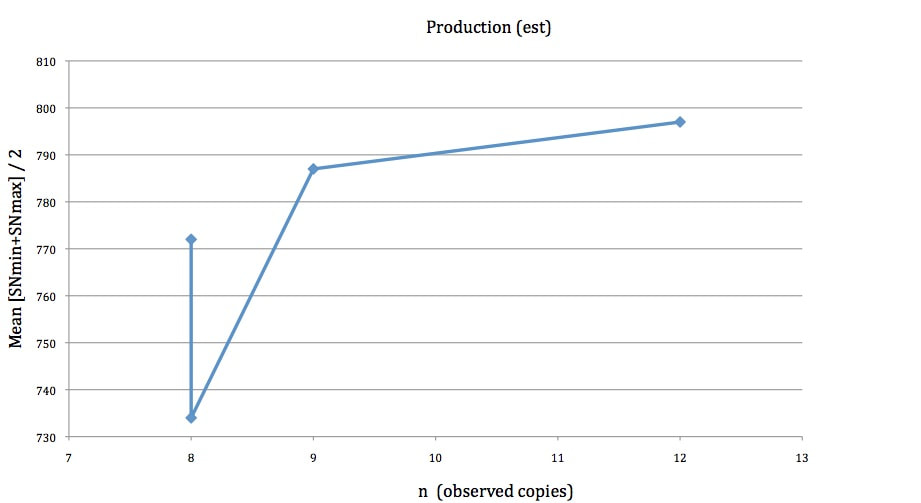
(Research Note: Since 2010 I have seen 1.51% (12 copies) of the total estimated 800 copies made.)
INTRODUCTION
This is the fastest, least common and final standard preset Takumar commercially produced. Three batches were made. Like it's progenitor, the Takumar 1: 2.2 / 55mm, the optical design is Gaussian; with an extra element, giving it 6 elements in 5 groups and the largest aperture (1.8) of any Takumar ever made at the time. It was available briefly with the Asahi Pentax S but a standard semi-automatic "Auto-Takumar" lens of the same speed paired with the Asahi Pentax K quickly superseded it.
This lens and the Takumar 1: 2.2 55mm are the standard lenses for the Asahi Pentax S camera launched a month before (and marketed alongside) the Asahi Pentax K, which outsold it. Thus neither the camera nor this lens are numerous. The total production of Asahi Pentax S cameras is estimated by Sherfy (1994) to be 3,600. Thus less than a quarter of those were purchased with this lens, or less, if the number of cameras produced was 4,900 (Gerjan van Oosten 1999, 2021).
It is illustrated on the front cover of the Asahi Pentax S Instruction Guide and is the last standard Takumar provided with single distance scales for domestic and export markets.
This is the fastest, least common and final standard preset Takumar commercially produced. Three batches were made. Like it's progenitor, the Takumar 1: 2.2 / 55mm, the optical design is Gaussian; with an extra element, giving it 6 elements in 5 groups and the largest aperture (1.8) of any Takumar ever made at the time. It was available briefly with the Asahi Pentax S but a standard semi-automatic "Auto-Takumar" lens of the same speed paired with the Asahi Pentax K quickly superseded it.
This lens and the Takumar 1: 2.2 55mm are the standard lenses for the Asahi Pentax S camera launched a month before (and marketed alongside) the Asahi Pentax K, which outsold it. Thus neither the camera nor this lens are numerous. The total production of Asahi Pentax S cameras is estimated by Sherfy (1994) to be 3,600. Thus less than a quarter of those were purchased with this lens, or less, if the number of cameras produced was 4,900 (Gerjan van Oosten 1999, 2021).
It is illustrated on the front cover of the Asahi Pentax S Instruction Guide and is the last standard Takumar provided with single distance scales for domestic and export markets.
DESCRIPTION
A new preset lens designed with 6 elements in 5 groups (deformation double Gaussian). Externally, lenses are black and chrome. The threaded filter ring is 46mm in diameter and the diaphragm has ten triangular blades. The barrel is made of black nickel alloy.
The Asahi Pentax (S) Instruction Guide (EN) illustrates several copies of this lens but gives limited details. Emanuel (1960) gives the viewing angle as 43° and the weight as 6 ozs (170 g) and (Sherfy, 1994) gives another weight as 164 grams.
Collaring the barrel is a focusing ring with a distance scale on the trailing edge. Turning this ring anti-clockwise moves a helical mechanism to focus the lens closer. The focus ring and threaded nameplate are black with fine white lettering. Nameplate style and print font are uniform throughout production and all copies have serial numbers placed after the name.
Scalloped into and equally-spaced around the circumference of focusing rings are 12 finger grips. Each grip has 10 parallel grooves cut sharp into the metal. Regular spaces remaining between finger grips form squares.
Distance scale units are marked on the left, either in “Feet”, “Meter”, or both, (for export and domestic markets); spelling chosen to suit initial marketing in USA. Distances begin with the infinity symbol and attenuate to the RHS in the following number series. Individual copies can focus significantly closer. Corresponding distance scales for all 55mm focal length lenses are identical up to 1960 when minimum apertures became f16 and made even closer focusing possible.
A new preset lens designed with 6 elements in 5 groups (deformation double Gaussian). Externally, lenses are black and chrome. The threaded filter ring is 46mm in diameter and the diaphragm has ten triangular blades. The barrel is made of black nickel alloy.
The Asahi Pentax (S) Instruction Guide (EN) illustrates several copies of this lens but gives limited details. Emanuel (1960) gives the viewing angle as 43° and the weight as 6 ozs (170 g) and (Sherfy, 1994) gives another weight as 164 grams.
Collaring the barrel is a focusing ring with a distance scale on the trailing edge. Turning this ring anti-clockwise moves a helical mechanism to focus the lens closer. The focus ring and threaded nameplate are black with fine white lettering. Nameplate style and print font are uniform throughout production and all copies have serial numbers placed after the name.
Scalloped into and equally-spaced around the circumference of focusing rings are 12 finger grips. Each grip has 10 parallel grooves cut sharp into the metal. Regular spaces remaining between finger grips form squares.
Distance scale units are marked on the left, either in “Feet”, “Meter”, or both, (for export and domestic markets); spelling chosen to suit initial marketing in USA. Distances begin with the infinity symbol and attenuate to the RHS in the following number series. Individual copies can focus significantly closer. Corresponding distance scales for all 55mm focal length lenses are identical up to 1960 when minimum apertures became f16 and made even closer focusing possible.
Feet ∞ 30 15 10 7 5 4 3.5 3 2.5 2.25 2 1.8
Meter ∞ 10 5 3 2 1.5 1.2 1.0 0.9 0.8 0.7 0.6 0.55
Meter ∞ 10 5 3 2 1.5 1.2 1.0 0.9 0.8 0.7 0.6 0.55
Three chrome rings complete the lens’ external appearance. Two adjacent rings near the front move independently and have uniform fine-knurled edges. Together they operate the preset diaphragm mechanism to set the aperture. On the barrel just forward of the first ring is a red dot used for selecting the aperture. Nine aperture stops in black numerals adorn these rings. No available half-stops or markings (such as dots) lie between these stops. As with all lenses of this age the minimum available aperture stop available is f=22.
22 16 11 8 5.6 4 2.8 2 1.8
The third and largest chrome ring is fixed. Its rear end is the M42 screw thread camera mount. On the perimeter is a bi-lateral depth of field (DOF) gauge with six numbered f stops on either side of a centre to engage the distance scales on the focusing ring above. Final production copies of this lens have a forward-pointing red triangle marking the central point of the gauge just above a single numeral 1.8 representing the largest aperture setting. Flanking this triangle are two black vertical lines to indicate the depth of field as read from the distance scale. The remaining set of black lines indicate 5 lesser aperture settings either side. These lines are bent to diverge away from the central point.
DOF gauge style
▲
22 16 11 8 4 1.8 4 8 11 16 22
▲
22 16 11 8 4 1.8 4 8 11 16 22
VARIATIONS
NOTES
- This is the last Takumar to be produced with single distance scales and carry one of the three possible combinations of distance scale, single (either "Feet", or "Meter"), or dual ("Feet/Meter"). The earliest copies carry single distance scales ("Feet" or "Meter") for domestic use as seen in the Asahi Pentax S Instruction Guide. The early SN 149683 and SN 157905 have a single "Feet" distance scale. Later copies carry dual scales for export markets like the one illustrated here and in Sherfy (1994). All future Takumars use only dual distance scales.
NOTES
LENS PRODUCTION (∑ lenses) ∑n = 13 Serial Numbers (SN) observed in 3 Batches covering 507 SN min.< ∑ lenses < 1088 SN max.
SN min. = accumulated total of serial numbers observed within 3 batches.
SN max. = accumulated total of serial numbers observed between adjacent batches of other lenses.
Styles: ▼ SN prefix "No" ▲ , ▼▼ dual distance scales Feet/Meter ▲▲
SN min. = accumulated total of serial numbers observed within 3 batches.
SN max. = accumulated total of serial numbers observed between adjacent batches of other lenses.
Styles: ▼ SN prefix "No" ▲ , ▼▼ dual distance scales Feet/Meter ▲▲
|
▼ 149683 to 149705 (2/ 22) |
Serial Numbers in 3 Batches
(n /SN range) ▼ 157905 (1/ 1) |
▼▼ 158393 to 158877 (10/ 484) ▲/▲▲ |
MARKETING
LITERATURE
