魚目Takumar 1 : 4 / 17
F i s h - e y e - T a k u m a r 1 : 4 / 17
Produced 1967 to 1971. Serial Numbers 2119xxx - 4901xxx. AOCo Product No. 43841. Honeywell Pentax Cat.No.7080. Updated April 2023
F i s h - e y e - T a k u m a r 1 : 4 / 17
Produced 1967 to 1971. Serial Numbers 2119xxx - 4901xxx. AOCo Product No. 43841. Honeywell Pentax Cat.No.7080. Updated April 2023
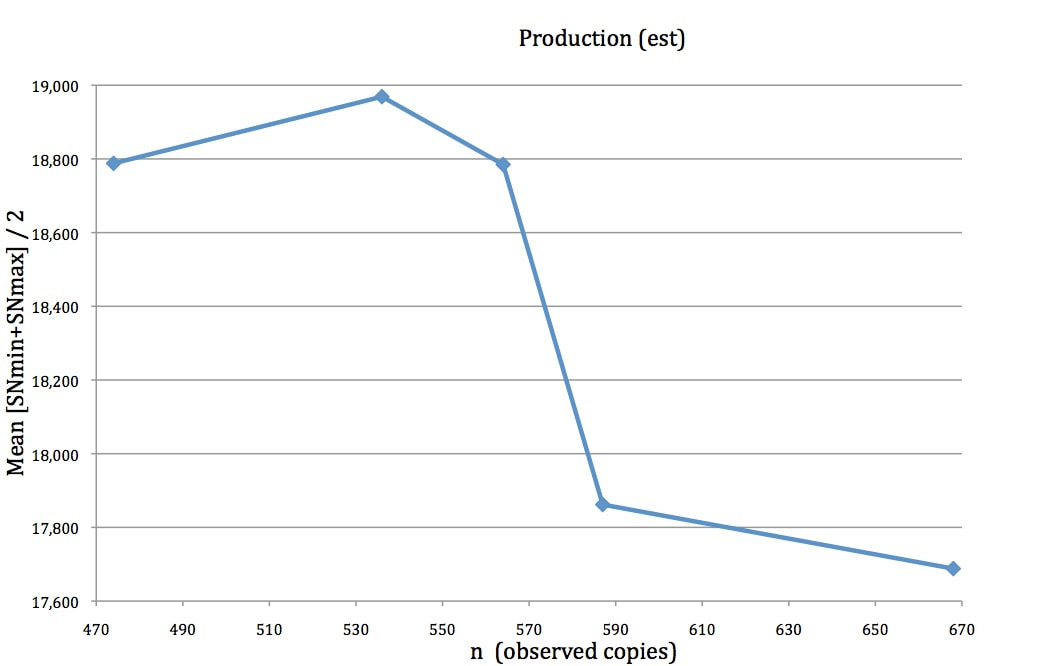
(Research Note: Since 2010 I have seen 3.78% (668 copies) of the total estimated 17,700 copies made.)
INTRODUCTION
The second 24x36mm format Fish-eye lens designed by AOCo was patented in 1966. The design was used for over a decade in 2 versions and in two more (K) bayonet mounted Pentax versions. It gives sharp images, good contrast and characteristic large depth of field with a 180 degree (diagonal) field of view. The barrel-shaped image is a feature of all fish-eye lenses. Three built-in gelatine filters selected by rotating the nameplate are intended for black and white film photography in this first version.
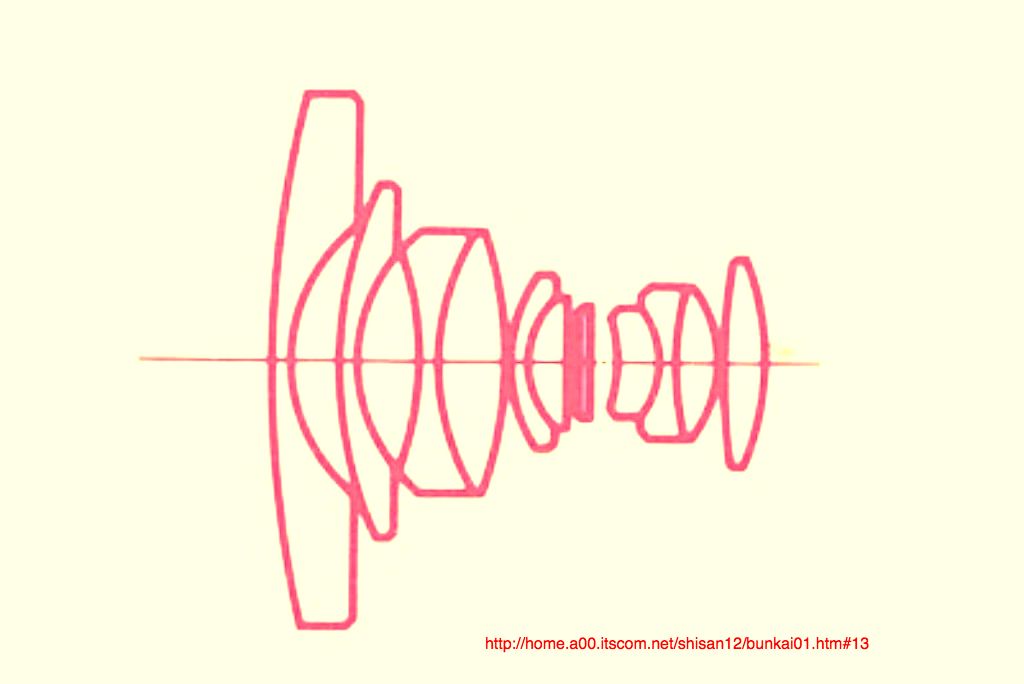
A Super-Takumar (ie. with an automatic diaphragm mechanism and an auto/manual switch) that has an amazing 11 glass elements in 7 groups. It is much more complex and sophisticated than the earliest (f=11/18mm) diagonal fish-eye lens (356) made by AOCo. The performance is a credit to it's designers. In 1971 super-multi-coated lens elements were added to the next version to make the performance even more efficient. Neither version has a hood. The glass projects just beyond the front by a few mm. It is protected by a deep front cap when stowed.
Care of this lens is important. It has no hood or filter to protect it from damage when in use. For security I add inner felt lining to the front lens cap, although that's probably redundant if the correct cap is used.
The second 24x36mm format Fish-eye lens designed by AOCo was patented in 1966. The design was used for over a decade in 2 versions and in two more (K) bayonet mounted Pentax versions. It gives sharp images, good contrast and characteristic large depth of field with a 180 degree (diagonal) field of view. The barrel-shaped image is a feature of all fish-eye lenses. Three built-in gelatine filters selected by rotating the nameplate are intended for black and white film photography in this first version.
A Super-Takumar (ie. with an automatic diaphragm mechanism and an auto/manual switch) that has an amazing 11 glass elements in 7 groups. It is much more complex and sophisticated than the earliest (f=11/18mm) diagonal fish-eye lens (356) made by AOCo. The performance is a credit to it's designers. In 1971 super-multi-coated lens elements were added to the next version to make the performance even more efficient. Neither version has a hood. The glass projects just beyond the front by a few mm. It is protected by a deep front cap when stowed.
Care of this lens is important. It has no hood or filter to protect it from damage when in use. For security I add inner felt lining to the front lens cap, although that's probably redundant if the correct cap is used.
DESCRIPTION
VARIATION
- All copies are similar. The finger grip formula is 10/12 on the focus ring and 10/10 on the aperture ring. Model inscription (43841) on the aperture switch begins after batch seven (approx. SN 2513225).
LENS PRODUCTION (∑ lenses) ∑n = 668 Serial Numbers observed in 51 Batches covering 13,704 SN min. < ∑ lenses < 21,673 SN max.
SN min. = accumulated total of serial numbers between those observed within 51 batches
SN max. = accumulated total of serial numbers observed between those adjacent batches of other lenses.
One Style: ▼ Focus ring F(10/12) ; Aperture ring A(10/10) ; Oval lettering on nameplate all lower case and " Asahi Opt. Co." lacking comma.▲
SN min. = accumulated total of serial numbers between those observed within 51 batches
SN max. = accumulated total of serial numbers observed between those adjacent batches of other lenses.
One Style: ▼ Focus ring F(10/12) ; Aperture ring A(10/10) ; Oval lettering on nameplate all lower case and " Asahi Opt. Co." lacking comma.▲
|
2119195 to 2119527 (16/ 332) 2358118 to 2358144 (4/ 26) 2363200 to 2363412 (14/ 212) 2512294 to 2512317 (3/ 23) 2512334 to 2512380 (2/ 46) 2512416 to 2512458 (3/ 42) 2513017 to 2513038 (3/ 21) 2513065 to 2513113 (6/ 48) 43841 model marking begins 2513128 to 2513273 (11/ 145) 2513294 (1/ 1) 2513312 to 2513317 (2/ 5) 2513345 (1/ 1) 2723770 to 2724044 (10/ 274) 2730403 to 2730938 (25/ 535) 2730582 2779059 to 2779222 (9/ 163) 2790463 (1/ 1) |
Serial Numbers in 51 Batches (n /SN range)
Collection 2852685 to 2852943 (17/ 258) 2861174 to 2861447 (18/ 273) 2867187 to 2867406 (10/ 219) 2930998 to 2931035 (4/ 37) 2933220 to 2933406 (4/ 186) 2936859 to 2937242 (14/ 383) 2937566 to 2937610 (2/ 44) 2938918 (1/ 1) 2940141 to 2940389 (7/ 248) 2942446 to 2942646 (9/ 200) 3047604 to 3047761 (10/ 157) 3054012 to 3054314 (10/ 302) 3058041 to 3058915 (34/ 874) 3064930 to 3065406 (23/ 476) 3115475 (1/ 1) 3115516 to 3116235 (47/ 719) 3243271 to 3243582 (12/ 310) 3247336 to 3247365 (3/ 29) |
3251593 to 3253113 (84/ 1520) 3257072 (1/ 1) 3258022 to 3258309 (15/ 287) 3258445 (1/ 1) 3262982 (1/ 1) 3404167 to 3405146 (45/ 979) 3556652 to 3557066 (22/ 414) 3560090 to 3560605 (25/ 515) 3761473 to 3761494 (2/ 21) 3772616 to 3773453 (46/ 837) 3774240 to 3774521 (15/ 281) 3891003 to 3891117 (5/ 114) 3909480 to 3909929 (19/ 449) 3911610 to 3912294 (27/ 684) 3917319 to 3917967 (18/ 648) 3921028 (1/ 1) 4901069 to 4901428 (4/ 359) 43842 SN starts 5390xxx |
